// SCOUT_HOMEPAGE
STIRTZ-AYEJAY-FC
PROFILES
01
BOARD_SPOTS
55
YEAR
2026
// SAVED_BOARD
2026_OVERALL_BOARD
TOP_30
// PROSPECT_GUIDE
AJ DYBANTSA
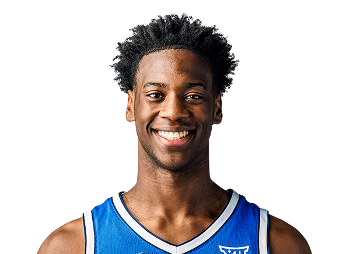
AJ DYBANTSA
Special scorer with slight cognitive and major defensive concerns.
// OFFENSIVE_EVALUATION
Possessing a never-seen-before combination of touch and footwork—especially at his size— our eyes tell us that AJ Dybantsa will walk into the league as a dominant and impactful offensive player. AJ is one of the most nimble basketball players I’ve ever watched, constantly under control and able to adjust to defenders in real time. With the ball in his hands, it feels like he can get wherever he wants on the floor. The main issue is that the shot he creates is not always the shot he should be taking. AJ settled for heavily contested mid-ranges far too often. Despite this, he still finished the year shooting 133-184 (72.3%) on close 2’s and 126-272 (46.3%) on far 2’s. Both very good numbers, especially in light of the questionable shot diet. I am not especially concerned about the shot selection. Between injuries and roster construction, BYU had one of the weakest offensive ecosystems in college basketball last season, and AJ was frequently asked to be the entire offense. It was clear he understood that reality and often took on shots that would not exist in a healthier, more functional system. To me, forcing bad looks on a bad team because that is what your role demands is far less alarming than a player simply being unable to create offense at all. Shot diets are also an easier fix than most struggles. I’d point to Utah Jazz rookie Ace Bailey as an example of this, as we are seeing him maximize his value by taking high quality shots, strongly contrasted by his time at Rutgers. AJ’s playmaking this year also wavered. Most of his reads came from out of the post where defenses would send two or three bodies at him. There were plenty of impressive skip passes and dumpoffs, but also a fair share of poor reads. Even so, the playmaking film is absolutely encouraging. AJ boasted a 15 TO %, which is not bad at all at his usage rate, but a barely positive 1.1 A/TO. Now again, I think context is really important here. Without sugarcoating it, BYU was horrible. The lack of spacing on offense often made it much easier for teams to send more bodies at AJ. Because of this lack of spacing, the full ability that most players have to punish defenses for this aggression was made much more difficult for Dybantsa. It is difficult to create out of doubles when the floor is congested and the passing outlets are not where they should be. A lot of AJ’s turnovers can be chalked up to scheme rather than cognition or concerning processing indicators. There are also concerns about the jumpshot. AJ’s low 3PR and 3P% are both valid concerns. But again, not something that I am worried about. The idea that a player may not need to take threes if he can dominate elsewhere has some truth to it, and it applies more to a player like AJ than it does to a smaller guard who needs to chuck threes to overcome other deficiencies. Even with this said, I still think AJ will see some improvement as a shooter. Mechanically his shot is sound. My biggest issue is the arc, especially from three, because too many of his attempts came off his hand very flat. That obviously hurts his margin for error, but it also feels like a very fixable problem rather than some deeper structural concern. AJ also shoots a solid percentage from the line at 77.4%, and I expect that to rise as he cleans up the arc stuff. AJ recorded a very solid 49 FTR, but I think even that does a massive disservice in representing his actual foul-drawing ability. B12 refs made a point to not give AJ a good whistle, often being hard not to notice. I truly believe if these games were reffed by NBA officials that he would be shooting at least 5 more free throws a game.
Percentiles are positional, measured against NBA players' last season in college.
// DEFENSIVE_EVALUATION
AJ has, in theory, all the physical tools you would want in a strong defender: he is 6'9", has a plus wingspan, and is an elite athlete. But having those traits alone does not guarantee defensive impact. There are plenty of NBA players with similar measurables who still grade out as negatives on that end, Jaylen Brown being one example. More than anything, defensive success usually comes down to a combination of, in my opinion, defensive IQ and motor. That is what makes AJ so intriguing. As you would expect from someone with his physical profile, he has shown real flashes of positive defense. This is something we can notice especially in BYU’s game against Iowa State, where he recorded two stocks and helped hold Milan Momcilovic, arguably the best shooter in college basketball, to just five points on five shots. We saw him fight through pin-downs, stay engaged on-ball, and play with seemingly a higher awareness than we had ever seen from him on that end. This game feels almost anomalous in retrospect compared to the rest of his defensive tape. At the same time, it is important not to overreact to flashes and project what a player “should be” based on them. Assuming a player will magically improve a negative aspect of their game (just because common sense tells us they should be better at it) is a slippery slope. If every long, athletic player with defensive struggles could simply put it all together, we would see far fewer negative defenders in the NBA. Some of AJ’s struggles may also be tied to the offensive burden he carried, and I think that is a fair point. Still, taking everything into account, I am comfortable projecting him as a serviceable defender at the NBA level.
// PROJECTION
I expect AJ to be an All-NBA player purely based on PRA at some point in his career. His true ceiling and actual impact will be determined by his defense. If he can be even an average defender, I think he’ll be in T5 talks for all of his prime. Peak Averages: 28.5 PPG, 7.5 RPG, 4.5 APG on 53/37/81
// OFFENSIVE_EVALUATION
Possessing a never-seen-before combination of touch and footwork—especially at his size— our eyes tell us that AJ Dybantsa will walk into the league as a dominant and impactful offensive player. AJ is one of the most nimble basketball players I’ve ever watched, constantly under control and able to adjust to defenders in real time. With the ball in his hands, it feels like he can get wherever he wants on the floor. The main issue is that the shot he creates is not always the shot he should be taking. AJ settled for heavily contested mid-ranges far too often. Despite this, he still finished the year shooting 133-184 (72.3%) on close 2’s and 126-272 (46.3%) on far 2’s. Both very good numbers, especially in light of the questionable shot diet. I am not especially concerned about the shot selection. Between injuries and roster construction, BYU had one of the weakest offensive ecosystems in college basketball last season, and AJ was frequently asked to be the entire offense. It was clear he understood that reality and often took on shots that would not exist in a healthier, more functional system. To me, forcing bad looks on a bad team because that is what your role demands is far less alarming than a player simply being unable to create offense at all. Shot diets are also an easier fix than most struggles. I’d point to Utah Jazz rookie Ace Bailey as an example of this, as we are seeing him maximize his value by taking high quality shots, strongly contrasted by his time at Rutgers. AJ’s playmaking this year also wavered. Most of his reads came from out of the post where defenses would send two or three bodies at him. There were plenty of impressive skip passes and dumpoffs, but also a fair share of poor reads. Even so, the playmaking film is absolutely encouraging. AJ boasted a 15 TO %, which is not bad at all at his usage rate, but a barely positive 1.1 A/TO. Now again, I think context is really important here. Without sugarcoating it, BYU was horrible. The lack of spacing on offense often made it much easier for teams to send more bodies at AJ. Because of this lack of spacing, the full ability that most players have to punish defenses for this aggression was made much more difficult for Dybantsa. It is difficult to create out of doubles when the floor is congested and the passing outlets are not where they should be. A lot of AJ’s turnovers can be chalked up to scheme rather than cognition or concerning processing indicators. There are also concerns about the jumpshot. AJ’s low 3PR and 3P% are both valid concerns. But again, not something that I am worried about. The idea that a player may not need to take threes if he can dominate elsewhere has some truth to it, and it applies more to a player like AJ than it does to a smaller guard who needs to chuck threes to overcome other deficiencies. Even with this said, I still think AJ will see some improvement as a shooter. Mechanically his shot is sound. My biggest issue is the arc, especially from three, because too many of his attempts came off his hand very flat. That obviously hurts his margin for error, but it also feels like a very fixable problem rather than some deeper structural concern. AJ also shoots a solid percentage from the line at 77.4%, and I expect that to rise as he cleans up the arc stuff. AJ recorded a very solid 49 FTR, but I think even that does a massive disservice in representing his actual foul-drawing ability. B12 refs made a point to not give AJ a good whistle, often being hard not to notice. I truly believe if these games were reffed by NBA officials that he would be shooting at least 5 more free throws a game.
// DEFENSIVE_EVALUATION
AJ has, in theory, all the physical tools you would want in a strong defender: he is 6'9", has a plus wingspan, and is an elite athlete. But having those traits alone does not guarantee defensive impact. There are plenty of NBA players with similar measurables who still grade out as negatives on that end, Jaylen Brown being one example. More than anything, defensive success usually comes down to a combination of, in my opinion, defensive IQ and motor. That is what makes AJ so intriguing. As you would expect from someone with his physical profile, he has shown real flashes of positive defense. This is something we can notice especially in BYU’s game against Iowa State, where he recorded two stocks and helped hold Milan Momcilovic, arguably the best shooter in college basketball, to just five points on five shots. We saw him fight through pin-downs, stay engaged on-ball, and play with seemingly a higher awareness than we had ever seen from him on that end. This game feels almost anomalous in retrospect compared to the rest of his defensive tape. At the same time, it is important not to overreact to flashes and project what a player “should be” based on them. Assuming a player will magically improve a negative aspect of their game (just because common sense tells us they should be better at it) is a slippery slope. If every long, athletic player with defensive struggles could simply put it all together, we would see far fewer negative defenders in the NBA. Some of AJ’s struggles may also be tied to the offensive burden he carried, and I think that is a fair point. Still, taking everything into account, I am comfortable projecting him as a serviceable defender at the NBA level.
// PROJECTION
I expect AJ to be an All-NBA player purely based on PRA at some point in his career. His true ceiling and actual impact will be determined by his defense. If he can be even an average defender, I think he’ll be in T5 talks for all of his prime. Peak Averages: 28.5 PPG, 7.5 RPG, 4.5 APG on 53/37/81
Percentiles are positional, measured against NBA players' last season in college.