// SCOUT_HOMEPAGE
UNDERSCOUT
PROFILES
01
BOARD_SPOTS
23
YEAR
2026
// SAVED_BOARD
2026_OVERALL_BOARD
TOP_23
// PROSPECT_GUIDE
LABARON PHILON
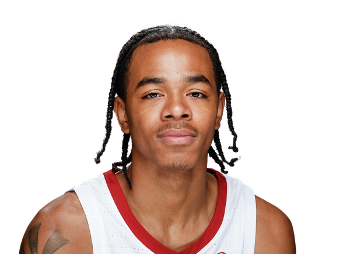
LABARON PHILON
Philon is not an explosive, power-driven guard prospect. He is a craft-and-processing guard, and that distinction matters. His best outcomes come from the same family of creators who win with pace manipulation, deceleration, change of direction, touch, and read anticipation rather than sheer burst.
Germany Schroder
// EXECUTIVE_SUMMARY
Labaron Philon is one of the best offensive guard bets in the 2026 class, and I think he is still being evaluated too conservatively. I would rank him in the top 5-7 in a big board, and easily in the top 3 among the guards in this class. He does not sell evaluators with elite measurables or obvious physical overwhelm. He wins with something more bankable for high-skill guards: advanced offensive feel, pace control, live-dribble problem-solving, and a real understanding of how to generate and exploit defensive shifts. He plays with poise, sees the floor early, manipulates coverages, and consistently finds answers in the half court. Statistically, the profile is already excellent: 31.9 AST%, 62.6 TS%, and 39.9% from three on 10.3 3PA.That is the profile of a player who can both create offense and sustain efficiency, which is a much rarer combination than many evaluators want to admit. Philon’s archetype is best understood as a lead combo guard with primary-creation upside. He is a modern on-ball initiator who creates advantages through handle craft, pace variation, touch, angles, shotmaking versatility, and fast processing. He can run pick-and-roll, score out of ball screens, punish drop coverage, attack mismatches, and make live-dribble reads to the second and third layer of the defense. The only real debate is how high the offensive role can scale in the modern NBA. I am more bullish than consensus here. I see a player with a legitimate pathway to becoming a high-end offensive engine, provided the physical concerns do not flatten his advantage creation against NBA length.
Percentiles are positional, measured against NBA players' last season in college.
// PROS
**Year-over-year development trajectory Philon’s development curve deserves far more weight in his evaluation than it usually gets. He did not simply improve around the margins. He expanded his game structurally. He went from functioning largely off the ball to carrying real on-ball creation responsibility, and he did so without sacrificing efficiency. That matters. Guards who show that kind of developmental elasticity at his age deserve to be taken seriously as upward-mobility bets. This is not a stagnant prospect polishing the same strengths. This is a player who has already demonstrated that he can absorb usage, add decision-making burden, and still produce efficiently. That speaks to work ethic, coachability, processing speed, and long-term offensive scalability. **Advanced pace, craft, and manipulation This is his signature trait. Philon does not need elite burst to create separation because he understands how to manufacture advantage windows. He uses hesitations, stride variation, tempo changes, shoulder shifts, deceleration, and body control to move defenders off their line. He is one of the better pace manipulators in the class, and that is a translatable NBA skill. A lot of college guards look dynamic because they are faster than the level. Philon is more convincing because he already wins in ways that map onto NBA shot creation. His game is not built on temporary athletic superiority. It is built on timing and problem-solving. **Real half-court shot creation I buy the shot creation. Fully. Philon can create offense in the half court both in isolation and as a pick-and-roll operator. His scoring profile is not inflated by transition volume, broken plays, or low-complexity reads. He is comfortable snaking ball screens, rejecting coverage, attacking drop, punishing switches, and getting to balanced pull-ups or touch finishes. He shot 39.9% from three on 10.3 attempts unassisted, which is the kind of volume-efficiency combination that materially changes how defenders have to guard him.That is not merely “he can shoot.” That is real shotmaking pressure. **Functional rim pressure without elite tools He is not a top-tier vertical athlete and he does not have a nuclear first step so he has to adapt. Philon still creates meaningful rim pressure because he gets defenders compromised early. He wins the first two steps of the possession with craft, not force. Once he gets a defender on his hip, he knows how to stay alive in the play and leverage touch rather than speed. This year, he is attempting 8.7 shots at the rim per game (82nd percentile) with a 65.7% success rate (78th percentile). His touch is good, and he is finishing the season with a 43.8% success rate on floaters, which is more than respectable. He will need to improve his floater and his drawing fouls to make it in the NBA. **Legitimate passing substance Philon is neither a scoring guard pretending to be a playmaker, nor a pass-first guard; he is a combo guard with good court vision and a good shooting touch – he is a very well-rounded player. He often makes the right play and has a high basketball IQ. He can hit the roller, spray to the weak side, make pocket reads, manipulate with vision and react to help in real time. He does not need the play pre-scripted for him to make the correct read. He sees defensive rotation patterns early and makes passes on the move, which is what separates useful passers from real offensive organizers. His 31.9 AST% confirms the film.I would go further: his passing is still a little underrated because people see the scorer first. He has more genuine creation value than many guards currently ranked around him. **Offensive lineup versatility Philon fits more lineup constructions than people assume. He can: -carry a meaningful usage load on a developmental team or run second-unit offense immediately, -function as a secondary initiator next to a larger primary, and retain value off the ball because defenders have to respect his shooting and ball-screen scoring. That versatility matters. Some small guards only work if the offense is fully handed to them. Philon is more adaptable than that. He has enough shooting gravity, advantage creation, and decision-making to survive in multiple offensive ecosystems.
// CONS
**Size and physical margin for error This is the real issue, and it is the one you cannot hand-wave away. Philon has to be very good because he does not have much physical margin for error. He is not winning with elite size, elite length, elite burst, or overwhelming force. For guards built like this, everything has to stay sharp: handle, balance, pull-up efficiency, touch, decision-making, and processing. That does not scare me off the profile, but it does tighten the tolerance band. Smaller guards with average athletic pop do not get to be sloppy. Philon’s path works because he is skilled enough to compensate. The question is whether that compensation holds at star-level volume against NBA athletes. **Defensive target risk He is not a point-of-attack stopper, and I do not think teams should pretend otherwise. Could he become more competitive defensively in a lower-usage role? Yes. Could improved strength and better roster context help him? Also yes. But the underlying concerns remain: size, explosion, and physical resistance. He has shown some positive flashes in terms of awareness, anticipation, and positioning, so I do not view him as a total defensive zero. But let’s be honest about the archetype: if you draft him, you are drafting offense first, and you are likely managing him defensively rather than building around him as a two-way guard. **Finishing translation against NBA length His current finishing package works because his timing is advanced and his touch is real. The question is whether it remains efficient when the windows shrink. NBA rim protectors recover faster, rotations are earlier, and length erases mistakes that college defenders cannot. Guards in this mold often survive at the rim not because they are explosive, but because they are one beat ahead mentally. Philon has that trait. He will still need to prove that the touch package is good enough to scale against bigger, longer, more disciplined defenses. **The “in-between” offensive outcome This is the only offensive caution flag I take seriously. There is always a risk with this type of guard that he lands in the middle: -not big/strong enough to impose himself physically on both side of the court, -not fast/dynamic/explosive enough to be a top-tier rim pressure engine, -not quite dominant enough as a passer to run everything. That is the archetypal trap. The difference with Philon is that his skill package is strong enough that I would still bet on a positive NBA outcome. But if you are looking for the cleanest argument against him, this is it: if the advantage creation scales down even slightly, the role may settle one tier lower than the believers expect.
// PROJECTION
**High-end outcome : SGA / Garland A lead offensive guard and co-star perimeter creator. If the shooting, handle craft, pacing, and passing continue to scale, Philon has a real chance to become one of the two central engines of a good NBA offense. In that outcome, the lack of elite physical tools matters less because his processing, touch, and shotmaking are strong enough to keep the defense in rotation. ** Median outcome : Germany Schroder / Derrick White A high-level starting combo guard who drives efficient offense through secondary creation, pull-up shooting, and pick-and-roll decision-making. This is not a fallback outcome. This is a very valuable NBA player. If Philon lands here, he is still the kind of guard winning teams want on the floor because he can organize offense, create late-clock answers, and play on or off the ball. **Low-end outcome : Pritchard / Sheppard (with more impact on playmaking and less on scoring/pure shooting) A high-end bench creator or lower-end starter whose offensive skill clearly translates but whose defensive vulnerability and physical limitations cap lineup scalability. Even in this outcome, I do not see him washing out offensively. The skill is too real for that. **Overall projection I am higher on Philon than consensus. He is not just a polished small guard. He is one of the more convincing skill-bet creators in the class. The shooting is real, the passing is real, the pacing is real, and the offensive feel is absolutely real. He generates offense in ways that tend to translate because they are rooted in craft, timing, and read quality, not in lower-level athletic dominance. If I am making the call, I am drafting Philon as a top-tier guard prospect in this class (top 3), not as a fallback option behind louder archetypes. In my view, the progress made in the second year with this type of prospect is also worth noting. His swing skill is not whether he can play. It is whether he becomes very good or borderline special offensively. My stance is simple: bet on the creator intelligence.
// EXECUTIVE_SUMMARY
Labaron Philon is one of the best offensive guard bets in the 2026 class, and I think he is still being evaluated too conservatively. I would rank him in the top 5-7 in a big board, and easily in the top 3 among the guards in this class. He does not sell evaluators with elite measurables or obvious physical overwhelm. He wins with something more bankable for high-skill guards: advanced offensive feel, pace control, live-dribble problem-solving, and a real understanding of how to generate and exploit defensive shifts. He plays with poise, sees the floor early, manipulates coverages, and consistently finds answers in the half court. Statistically, the profile is already excellent: 31.9 AST%, 62.6 TS%, and 39.9% from three on 10.3 3PA.That is the profile of a player who can both create offense and sustain efficiency, which is a much rarer combination than many evaluators want to admit. Philon’s archetype is best understood as a lead combo guard with primary-creation upside. He is a modern on-ball initiator who creates advantages through handle craft, pace variation, touch, angles, shotmaking versatility, and fast processing. He can run pick-and-roll, score out of ball screens, punish drop coverage, attack mismatches, and make live-dribble reads to the second and third layer of the defense. The only real debate is how high the offensive role can scale in the modern NBA. I am more bullish than consensus here. I see a player with a legitimate pathway to becoming a high-end offensive engine, provided the physical concerns do not flatten his advantage creation against NBA length.
// PROS
**Year-over-year development trajectory Philon’s development curve deserves far more weight in his evaluation than it usually gets. He did not simply improve around the margins. He expanded his game structurally. He went from functioning largely off the ball to carrying real on-ball creation responsibility, and he did so without sacrificing efficiency. That matters. Guards who show that kind of developmental elasticity at his age deserve to be taken seriously as upward-mobility bets. This is not a stagnant prospect polishing the same strengths. This is a player who has already demonstrated that he can absorb usage, add decision-making burden, and still produce efficiently. That speaks to work ethic, coachability, processing speed, and long-term offensive scalability. **Advanced pace, craft, and manipulation This is his signature trait. Philon does not need elite burst to create separation because he understands how to manufacture advantage windows. He uses hesitations, stride variation, tempo changes, shoulder shifts, deceleration, and body control to move defenders off their line. He is one of the better pace manipulators in the class, and that is a translatable NBA skill. A lot of college guards look dynamic because they are faster than the level. Philon is more convincing because he already wins in ways that map onto NBA shot creation. His game is not built on temporary athletic superiority. It is built on timing and problem-solving. **Real half-court shot creation I buy the shot creation. Fully. Philon can create offense in the half court both in isolation and as a pick-and-roll operator. His scoring profile is not inflated by transition volume, broken plays, or low-complexity reads. He is comfortable snaking ball screens, rejecting coverage, attacking drop, punishing switches, and getting to balanced pull-ups or touch finishes. He shot 39.9% from three on 10.3 attempts unassisted, which is the kind of volume-efficiency combination that materially changes how defenders have to guard him.That is not merely “he can shoot.” That is real shotmaking pressure. **Functional rim pressure without elite tools He is not a top-tier vertical athlete and he does not have a nuclear first step so he has to adapt. Philon still creates meaningful rim pressure because he gets defenders compromised early. He wins the first two steps of the possession with craft, not force. Once he gets a defender on his hip, he knows how to stay alive in the play and leverage touch rather than speed. This year, he is attempting 8.7 shots at the rim per game (82nd percentile) with a 65.7% success rate (78th percentile). His touch is good, and he is finishing the season with a 43.8% success rate on floaters, which is more than respectable. He will need to improve his floater and his drawing fouls to make it in the NBA. **Legitimate passing substance Philon is neither a scoring guard pretending to be a playmaker, nor a pass-first guard; he is a combo guard with good court vision and a good shooting touch – he is a very well-rounded player. He often makes the right play and has a high basketball IQ. He can hit the roller, spray to the weak side, make pocket reads, manipulate with vision and react to help in real time. He does not need the play pre-scripted for him to make the correct read. He sees defensive rotation patterns early and makes passes on the move, which is what separates useful passers from real offensive organizers. His 31.9 AST% confirms the film.I would go further: his passing is still a little underrated because people see the scorer first. He has more genuine creation value than many guards currently ranked around him. **Offensive lineup versatility Philon fits more lineup constructions than people assume. He can: -carry a meaningful usage load on a developmental team or run second-unit offense immediately, -function as a secondary initiator next to a larger primary, and retain value off the ball because defenders have to respect his shooting and ball-screen scoring. That versatility matters. Some small guards only work if the offense is fully handed to them. Philon is more adaptable than that. He has enough shooting gravity, advantage creation, and decision-making to survive in multiple offensive ecosystems.
// CONS
**Size and physical margin for error This is the real issue, and it is the one you cannot hand-wave away. Philon has to be very good because he does not have much physical margin for error. He is not winning with elite size, elite length, elite burst, or overwhelming force. For guards built like this, everything has to stay sharp: handle, balance, pull-up efficiency, touch, decision-making, and processing. That does not scare me off the profile, but it does tighten the tolerance band. Smaller guards with average athletic pop do not get to be sloppy. Philon’s path works because he is skilled enough to compensate. The question is whether that compensation holds at star-level volume against NBA athletes. **Defensive target risk He is not a point-of-attack stopper, and I do not think teams should pretend otherwise. Could he become more competitive defensively in a lower-usage role? Yes. Could improved strength and better roster context help him? Also yes. But the underlying concerns remain: size, explosion, and physical resistance. He has shown some positive flashes in terms of awareness, anticipation, and positioning, so I do not view him as a total defensive zero. But let’s be honest about the archetype: if you draft him, you are drafting offense first, and you are likely managing him defensively rather than building around him as a two-way guard. **Finishing translation against NBA length His current finishing package works because his timing is advanced and his touch is real. The question is whether it remains efficient when the windows shrink. NBA rim protectors recover faster, rotations are earlier, and length erases mistakes that college defenders cannot. Guards in this mold often survive at the rim not because they are explosive, but because they are one beat ahead mentally. Philon has that trait. He will still need to prove that the touch package is good enough to scale against bigger, longer, more disciplined defenses. **The “in-between” offensive outcome This is the only offensive caution flag I take seriously. There is always a risk with this type of guard that he lands in the middle: -not big/strong enough to impose himself physically on both side of the court, -not fast/dynamic/explosive enough to be a top-tier rim pressure engine, -not quite dominant enough as a passer to run everything. That is the archetypal trap. The difference with Philon is that his skill package is strong enough that I would still bet on a positive NBA outcome. But if you are looking for the cleanest argument against him, this is it: if the advantage creation scales down even slightly, the role may settle one tier lower than the believers expect.
// PROJECTION
**High-end outcome : SGA / Garland A lead offensive guard and co-star perimeter creator. If the shooting, handle craft, pacing, and passing continue to scale, Philon has a real chance to become one of the two central engines of a good NBA offense. In that outcome, the lack of elite physical tools matters less because his processing, touch, and shotmaking are strong enough to keep the defense in rotation. ** Median outcome : Germany Schroder / Derrick White A high-level starting combo guard who drives efficient offense through secondary creation, pull-up shooting, and pick-and-roll decision-making. This is not a fallback outcome. This is a very valuable NBA player. If Philon lands here, he is still the kind of guard winning teams want on the floor because he can organize offense, create late-clock answers, and play on or off the ball. **Low-end outcome : Pritchard / Sheppard (with more impact on playmaking and less on scoring/pure shooting) A high-end bench creator or lower-end starter whose offensive skill clearly translates but whose defensive vulnerability and physical limitations cap lineup scalability. Even in this outcome, I do not see him washing out offensively. The skill is too real for that. **Overall projection I am higher on Philon than consensus. He is not just a polished small guard. He is one of the more convincing skill-bet creators in the class. The shooting is real, the passing is real, the pacing is real, and the offensive feel is absolutely real. He generates offense in ways that tend to translate because they are rooted in craft, timing, and read quality, not in lower-level athletic dominance. If I am making the call, I am drafting Philon as a top-tier guard prospect in this class (top 3), not as a fallback option behind louder archetypes. In my view, the progress made in the second year with this type of prospect is also worth noting. His swing skill is not whether he can play. It is whether he becomes very good or borderline special offensively. My stance is simple: bet on the creator intelligence.
Percentiles are positional, measured against NBA players' last season in college.