// SCOUT_HOMEPAGE
REVERSEENIGMA
PROFILES
01
BOARD_SPOTS
33
YEAR
2026
// SAVED_BOARD
2026_OVERALL_BOARD
TOP_30
// PROSPECT_GUIDE
PATRICK NGONGBA
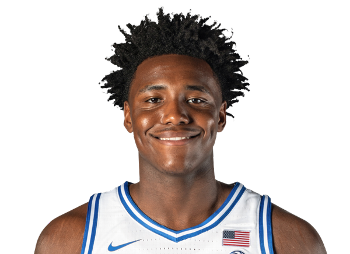
PATRICK NGONGBA
No scouting summary yet...
The passing, the rim protection, the high-post orchestration, the defensive intelligence, and the eventual shooting development. Horford was not an elite athlete either, but he processed the game faster than everyone around him and became one of the most valuable two-way centers of his generation. If the three-point shot actualizes and the health holds, Ngongba has the tools and the feel to reach a similar realm of impact. Horford was meaningfully more mobile at the same stage and eventually became a switchable defender, which is something Ngongba is unlikely to replicate. The path to this outcome runs through the passing and offensive development rather than defensive versatility.
The passing is the connective thread. Hartenstein built his value as a high-post hub who finds cutters through traffic, crashes the offensive glass relentlessly, and maximizes feel and positioning over raw athleticism. The offensive rebounding, the touch, the free-throw rate, and the short-space processing all map naturally to Ngongba's skill set. The rim protection is the bigger distinction. Ngongba's block rate has risen but he has not reached Hartenstein's level as a pure paint deterrent, and the mobility gap limits how much ground he can cover as a help defender. The median outcome is a center whose passing and finishing translate, whose defense is solid enough to start, but whose rim protection never reaches true anchor status and whose shooting stays theoretical. That is still a high-value center in today's league.
A competent starting center who checks a lot of boxes at an adequate level without ever really moving the needle. Carter has some touch, some passing, and adequate rim protection, but he never became the defensive anchor or offensive hub his tools hinted at. The floor for Ngongba is a version where the passing translates at a basic level but never becomes the weapon it should be, the rim protection stays solid but not elite, the shooting never arrives, and the injuries keep the development from compounding. The result is a useful starter who does a lot of things at an acceptable level without excelling at any one thing.
// EXECUTIVE_SUMMARY
Ngongba is one of the more unique big prospects in recent drafts. The combination of legitimate center size, elite interior finishing, high-feel passing from the high post, and surging rim protection places him in a statistical tier occupied by names like Clingan, Mobley, Towns, and Embiid at the same stage. He is not the athlete those players were, but the multi-category production at his age is difficult to dismiss. Duke has been dominant with Ngongba and Boozer sharing the floor, and his role as the connective hub of their 5-out offense has showcased a skill set that translates directly to how the best teams in the NBA use their centers. The foot injuries are the primary risk factor. Everything else about the profile suggests a player who should be a long-term rotation piece at minimum, with real upside beyond that if the shot develops and the body holds.
Percentiles are positional, measured against NBA players' last season in college.
// OFFENSIVE_EVALUATION
Finishing: Ngongba converts at the rim at an elite rate. The catch radius, touch, and high release point make him effective as a lob target, a dunker spot finisher, and a post scorer. He does not need to dunk everything to be effective. He can finish through contact, use either hand (though the left needs refinement), and generates additional high-value looks through offensive rebounding. The free-throw rate is aggressive, indicating a player who actively seeks contact rather than avoiding it. Passing: This is the differentiator. Ngongba operates at a 16.7% assist rate with a strong assist-to-turnover ratio, rare numbers for a center at any level. He processes defensive rotations from the high post, elbow, and nail faster than most bigs process a simple handoff. The short-space reads are where the skill is most visible. He identifies cutters slipping behind rotations before the windows fully open, delivers lobs over undersized switches, and threads passes through congestion with timing and accuracy that reflect genuine feel rather than scripted execution. The hi-lo connection with Cam Boozer has been the signature action, but the broader passing toolkit suggests he can function as a hub in multiple offensive architectures. The improvisational reads are still developing. Most of the passing comes from a standstill, and he lacks the handle, burst, or creativity to generate advantages off the dribble the way the most dynamic passing bigs can. Shooting: Theoretical. He is 8-for-31 from three this season, which is not a bankable sample,but the touch on interior non-dunks has been fairly consistent throughout his career. The willingness to take the open three when defenders give him space is present. If this develops into even a low-volume, credible threat, the offensive profile becomes very intriguing. A big who finishes, passes, crashes the glass, and spaces the floor can fit into any lineup.
// DEFENSIVE_EVALUATION
Rim Protection: Ngongba's block rate has risen from 5.6% last season to 6% this year, and the improvement maps onto what the film shows. He is more decisive in his rotations, more disciplined in drop coverage, and more willing to meet ball handlers at the correct angles. He uses fast hands to pinpoint the ball for rejections rather than relying purely on length. In the post, he holds his ground, stays vertical, and does not bite on fakes. Awareness: Ngongba monitors man and ball simultaneously and refuses to get pulled out of position by off-ball decoys. He communicates coverages, reads actions early, and positions himself to deter rather than just react. The defensive intelligence is ahead of the physical tools, which is promising for long-term development. Limitations: He is not a switchable defender and is unlikely to become a real one. Lateral mobility is adequate for drop coverage and post defense but tightens against perimeter-heavy attacks that force him into space. He rarely gets out in transition due to a lack of end-to-end speed, which limits his value in pace-pushing systems. The foul rate is worth monitoring, as his aggressiveness can bleed into fouling stretches that limit his minutes.
// PROJECTION
Ngongba projects as a starting-caliber two-way center whose value is anchored in finishing, passing, and rim protection. The floor is a high-level rotation big who protects the paint, finishes his plays, and adds enough connective passing to justify minutes in playoff-level lineups. The ceiling, contingent on offensive development and health, is a legitimate two-way hub who can anchor a defense and orchestrate an offense from the high post. The risk is mostly physical. The foot injuries are the single biggest variable in his projection. For a player whose mobility is already a limiting factor, any further erosion narrows the margin considerably. The NBA is unforgiving to big men who cannot stay available, and the movement demands of the modern game amplify that concern. If the feet hold, this is a player who should return value well above his draft position. The passing feel, the defensive growth trajectory, and the size are a combination that does not appear in every draft class. Teams that prioritize cognitive tools over athletic ceilings in their big men will find a lot to like here. The investment tends to pay off when the profile is this well-rounded, and the only question is whether the body lets the basketball brain do its job.
// EXECUTIVE_SUMMARY
Ngongba is one of the more unique big prospects in recent drafts. The combination of legitimate center size, elite interior finishing, high-feel passing from the high post, and surging rim protection places him in a statistical tier occupied by names like Clingan, Mobley, Towns, and Embiid at the same stage. He is not the athlete those players were, but the multi-category production at his age is difficult to dismiss. Duke has been dominant with Ngongba and Boozer sharing the floor, and his role as the connective hub of their 5-out offense has showcased a skill set that translates directly to how the best teams in the NBA use their centers. The foot injuries are the primary risk factor. Everything else about the profile suggests a player who should be a long-term rotation piece at minimum, with real upside beyond that if the shot develops and the body holds.
// OFFENSIVE_EVALUATION
Finishing: Ngongba converts at the rim at an elite rate. The catch radius, touch, and high release point make him effective as a lob target, a dunker spot finisher, and a post scorer. He does not need to dunk everything to be effective. He can finish through contact, use either hand (though the left needs refinement), and generates additional high-value looks through offensive rebounding. The free-throw rate is aggressive, indicating a player who actively seeks contact rather than avoiding it. Passing: This is the differentiator. Ngongba operates at a 16.7% assist rate with a strong assist-to-turnover ratio, rare numbers for a center at any level. He processes defensive rotations from the high post, elbow, and nail faster than most bigs process a simple handoff. The short-space reads are where the skill is most visible. He identifies cutters slipping behind rotations before the windows fully open, delivers lobs over undersized switches, and threads passes through congestion with timing and accuracy that reflect genuine feel rather than scripted execution. The hi-lo connection with Cam Boozer has been the signature action, but the broader passing toolkit suggests he can function as a hub in multiple offensive architectures. The improvisational reads are still developing. Most of the passing comes from a standstill, and he lacks the handle, burst, or creativity to generate advantages off the dribble the way the most dynamic passing bigs can. Shooting: Theoretical. He is 8-for-31 from three this season, which is not a bankable sample,but the touch on interior non-dunks has been fairly consistent throughout his career. The willingness to take the open three when defenders give him space is present. If this develops into even a low-volume, credible threat, the offensive profile becomes very intriguing. A big who finishes, passes, crashes the glass, and spaces the floor can fit into any lineup.
// DEFENSIVE_EVALUATION
Rim Protection: Ngongba's block rate has risen from 5.6% last season to 6% this year, and the improvement maps onto what the film shows. He is more decisive in his rotations, more disciplined in drop coverage, and more willing to meet ball handlers at the correct angles. He uses fast hands to pinpoint the ball for rejections rather than relying purely on length. In the post, he holds his ground, stays vertical, and does not bite on fakes. Awareness: Ngongba monitors man and ball simultaneously and refuses to get pulled out of position by off-ball decoys. He communicates coverages, reads actions early, and positions himself to deter rather than just react. The defensive intelligence is ahead of the physical tools, which is promising for long-term development. Limitations: He is not a switchable defender and is unlikely to become a real one. Lateral mobility is adequate for drop coverage and post defense but tightens against perimeter-heavy attacks that force him into space. He rarely gets out in transition due to a lack of end-to-end speed, which limits his value in pace-pushing systems. The foul rate is worth monitoring, as his aggressiveness can bleed into fouling stretches that limit his minutes.
// PROJECTION
Ngongba projects as a starting-caliber two-way center whose value is anchored in finishing, passing, and rim protection. The floor is a high-level rotation big who protects the paint, finishes his plays, and adds enough connective passing to justify minutes in playoff-level lineups. The ceiling, contingent on offensive development and health, is a legitimate two-way hub who can anchor a defense and orchestrate an offense from the high post. The risk is mostly physical. The foot injuries are the single biggest variable in his projection. For a player whose mobility is already a limiting factor, any further erosion narrows the margin considerably. The NBA is unforgiving to big men who cannot stay available, and the movement demands of the modern game amplify that concern. If the feet hold, this is a player who should return value well above his draft position. The passing feel, the defensive growth trajectory, and the size are a combination that does not appear in every draft class. Teams that prioritize cognitive tools over athletic ceilings in their big men will find a lot to like here. The investment tends to pay off when the profile is this well-rounded, and the only question is whether the body lets the basketball brain do its job.
Percentiles are positional, measured against NBA players' last season in college.