// SCOUT_HOMEPAGE
THEYCALLMEJSTAR
@2Jstar1ing
PROFILES
01
BOARD_SPOTS
26
YEAR
2026
// SAVED_BOARD
2026_OVERALL_BOARD
TOP_26
// PROSPECT_GUIDE
ZUBY EJIOFOR
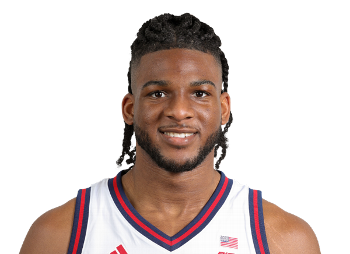
ZUBY EJIOFOR
No scouting summary yet...
// EXECUTIVE_SUMMARY
Zuby Ejiofor has given everything he has to St. John’s. Four seasons ago, he joined defending champions Kansas as the No. 80-ranked high school senior in the country, serving as a role player behind Ochai Agbaji, Christian Braun and Jalen Wilson. His highest minutes in a single game there never exceeded 12. After transferring to St. John’s, he has cemented himself as one of the program’s all-time greats: his career 11.0 Box Plus-Minus (BPM) ranks 23rd nationally among all players since the 2010-11 season. If you remove his single season at Kansas from the calculation, that number jumps to 11.4, which is fourth all-time in Big East history. This season alone, he earned Big East Regular Season MVP, Big East Tournament MVP, Big East Defensive Player of the Year and a spot on the All-Big East First Team; he was also a finalist for the Kareem Abdul-Jabbar Award and a candidate for the Naismith Defensive Player of the Year… Most importantly, he led his program to the Sweet 16 for the first time in 27 years. You can see shades of 2020 prospect Isaiah Stewart in Ejiofor: both are elite offensive rebounders, capable of switching onto multiple positions, and stand at a similar height. But they are also completely different players.
Percentiles are positional, measured against NBA players' last season in college.
// OFFENSIVE_EVALUATION
On the offensive end, he is also a truly unique prospect. Zuby Ejiofor’s assist rate is higher than the pre-draft season marks of DaRon Holmes II, Santi Aldama, Collin Murray-Boyles, Johni Broome and even Kyle Filipowski. Part of this stems from his dominance on the offensive glass: Ejiofor excels at grabbing offensive rebounds and quickly kicking the ball out to open shooters on the perimeter, but his playmaking goes far beyond that. When he holds the ball at the top of the arc, his processing is similar to Thomas Sorber: he can hit cutting teammates with bounce passes, or after facing up and creating a little space, he can make crosscourt passes to spot-up shooters waiting behind the three-point line. He also frequently makes quick, instinctive passes to open teammates when he is off-balance and about to turn the ball over. Among big men of his archetype, Zuby also posts one of the best assist-to-turnover ratios, though that isn’t necessarily all good news. That’s because Ejiofor’s low-post offense and interior finishing are well below standard. His conversion rate on simple finishes (outside of putbacks) is far lower than that of other elite big men. He runs the floor as fast as an out-of-control dump truck rolling downhill after a screen roll, but whether the ball actually goes through the hoop after he crashes the rim is anyone’s guess. This likely isn’t an issue with his touch or physical strength (he’s clearly a strong player). I do have a minor question about his hand size: he is definitely not a sloppy ball-handler, but he seems inconsistent when he goes up to finish the layup. Maybe the official combine measurements will answer that question. It’s also hard to say he’s a reliable shooter — his three-point volume and efficiency are underwhelming to say the least. That said, he has a knack for knocking down unexpected triples in big games: he went 2-for-3 from deep against Alabama, hit 4 threes total across three games against UConn, and drained another two against Duke today. That at least leaves some hope for him to transition to a stretch four role; Duop Reath put up similar three-point numbers back in 2017 before he developed into a reliable floor spacer.
// DEFENSIVE_EVALUATION
Ejiofor is one of the rare big men who can effectively guard perimeter players. His lateral speed and defensive footwork are more comparable to a small forward, and he can really stay in front of quick 6-foot-1 guards like Aden Holloway, Nigel James Jr. and Malik Mack. His balance and positional awareness far outpace most other switch-heavy big man prospects in his draft class. On the flip side, Ejiofor can’t hold a candle to Stewart as a low-post defender and rim protector. His standing reach is shorter than Stewart’s, and he also lacks Stewart’s brute strength. When opponents catch the ball on the block, Ejiofor cannot generate consistent contest pressure. If he overcommits and steps up too far, he tends to bite on fakes and jump prematurely. If he drops back too deep, he gets completely overpowered by the offensive player’s size. Drop coverage has never been Ejiofor’s strong suit, and given his physical profile, it’s unlikely to improve dramatically at the next level. That leaves the core question: can his perimeter defense translate to the NBA?
// EXECUTIVE_SUMMARY
Zuby Ejiofor has given everything he has to St. John’s. Four seasons ago, he joined defending champions Kansas as the No. 80-ranked high school senior in the country, serving as a role player behind Ochai Agbaji, Christian Braun and Jalen Wilson. His highest minutes in a single game there never exceeded 12. After transferring to St. John’s, he has cemented himself as one of the program’s all-time greats: his career 11.0 Box Plus-Minus (BPM) ranks 23rd nationally among all players since the 2010-11 season. If you remove his single season at Kansas from the calculation, that number jumps to 11.4, which is fourth all-time in Big East history. This season alone, he earned Big East Regular Season MVP, Big East Tournament MVP, Big East Defensive Player of the Year and a spot on the All-Big East First Team; he was also a finalist for the Kareem Abdul-Jabbar Award and a candidate for the Naismith Defensive Player of the Year… Most importantly, he led his program to the Sweet 16 for the first time in 27 years. You can see shades of 2020 prospect Isaiah Stewart in Ejiofor: both are elite offensive rebounders, capable of switching onto multiple positions, and stand at a similar height. But they are also completely different players.
// OFFENSIVE_EVALUATION
On the offensive end, he is also a truly unique prospect. Zuby Ejiofor’s assist rate is higher than the pre-draft season marks of DaRon Holmes II, Santi Aldama, Collin Murray-Boyles, Johni Broome and even Kyle Filipowski. Part of this stems from his dominance on the offensive glass: Ejiofor excels at grabbing offensive rebounds and quickly kicking the ball out to open shooters on the perimeter, but his playmaking goes far beyond that. When he holds the ball at the top of the arc, his processing is similar to Thomas Sorber: he can hit cutting teammates with bounce passes, or after facing up and creating a little space, he can make crosscourt passes to spot-up shooters waiting behind the three-point line. He also frequently makes quick, instinctive passes to open teammates when he is off-balance and about to turn the ball over. Among big men of his archetype, Zuby also posts one of the best assist-to-turnover ratios, though that isn’t necessarily all good news. That’s because Ejiofor’s low-post offense and interior finishing are well below standard. His conversion rate on simple finishes (outside of putbacks) is far lower than that of other elite big men. He runs the floor as fast as an out-of-control dump truck rolling downhill after a screen roll, but whether the ball actually goes through the hoop after he crashes the rim is anyone’s guess. This likely isn’t an issue with his touch or physical strength (he’s clearly a strong player). I do have a minor question about his hand size: he is definitely not a sloppy ball-handler, but he seems inconsistent when he goes up to finish the layup. Maybe the official combine measurements will answer that question. It’s also hard to say he’s a reliable shooter — his three-point volume and efficiency are underwhelming to say the least. That said, he has a knack for knocking down unexpected triples in big games: he went 2-for-3 from deep against Alabama, hit 4 threes total across three games against UConn, and drained another two against Duke today. That at least leaves some hope for him to transition to a stretch four role; Duop Reath put up similar three-point numbers back in 2017 before he developed into a reliable floor spacer.
// DEFENSIVE_EVALUATION
Ejiofor is one of the rare big men who can effectively guard perimeter players. His lateral speed and defensive footwork are more comparable to a small forward, and he can really stay in front of quick 6-foot-1 guards like Aden Holloway, Nigel James Jr. and Malik Mack. His balance and positional awareness far outpace most other switch-heavy big man prospects in his draft class. On the flip side, Ejiofor can’t hold a candle to Stewart as a low-post defender and rim protector. His standing reach is shorter than Stewart’s, and he also lacks Stewart’s brute strength. When opponents catch the ball on the block, Ejiofor cannot generate consistent contest pressure. If he overcommits and steps up too far, he tends to bite on fakes and jump prematurely. If he drops back too deep, he gets completely overpowered by the offensive player’s size. Drop coverage has never been Ejiofor’s strong suit, and given his physical profile, it’s unlikely to improve dramatically at the next level. That leaves the core question: can his perimeter defense translate to the NBA?
Percentiles are positional, measured against NBA players' last season in college.